
Hiking
07. November 2024 - by Konvin
The Highlands of Iceland are the country’s most remote region. Outside of the short summer season, the F-roads are closed to all but specialist vehicles, effectively putting much of the area off-limits for rentals. However, this is a part of Iceland where the scenery is extraordinary, and exploring such striking landscapes is a tempting prospect. Let’s take a brief look at this remote but striking region and find out which places you should include on your itinerary.
If you only have time for one part of the Highlands, make it Landmannalaugar. Blessed with geothermal pools and colourful rhyolite mountains, this is one of the most dazzling areas in the country and not to be missed.
Remote and rugged, Askja was once used by NASA to help train its astronauts for lunar landscapes. This place, characterised by lava fields and volcanic craters, is ethereal and other-worldly, which explains why adventurous travellers find it so compelling.
Kerlingarfjöll promises river crossings, mountain peaks and steaming hot springs, making it an enticing prospect for those hoping to get off the beaten track. Campers are welcome to pitch a tent or park a van at Kerlingarfjöll Highland Resort.
The Sprengisandur Route, also known as the F26, is the longest F-road in Iceland. If you’re looking for a truly epic trip then this ultra-challenging drive is going to tick a lot of boxes. Vast swathes of black sand give way to distant mountains in this unforgettable landscape.
Verdant and boasting an almost magical beauty, Þórsmork is likely to find its way onto many a bucket list. However to reach it requires tackling powerful river crossings and it’s not recommended even in a 4x4 camper van; for this one, opt for a tour instead.
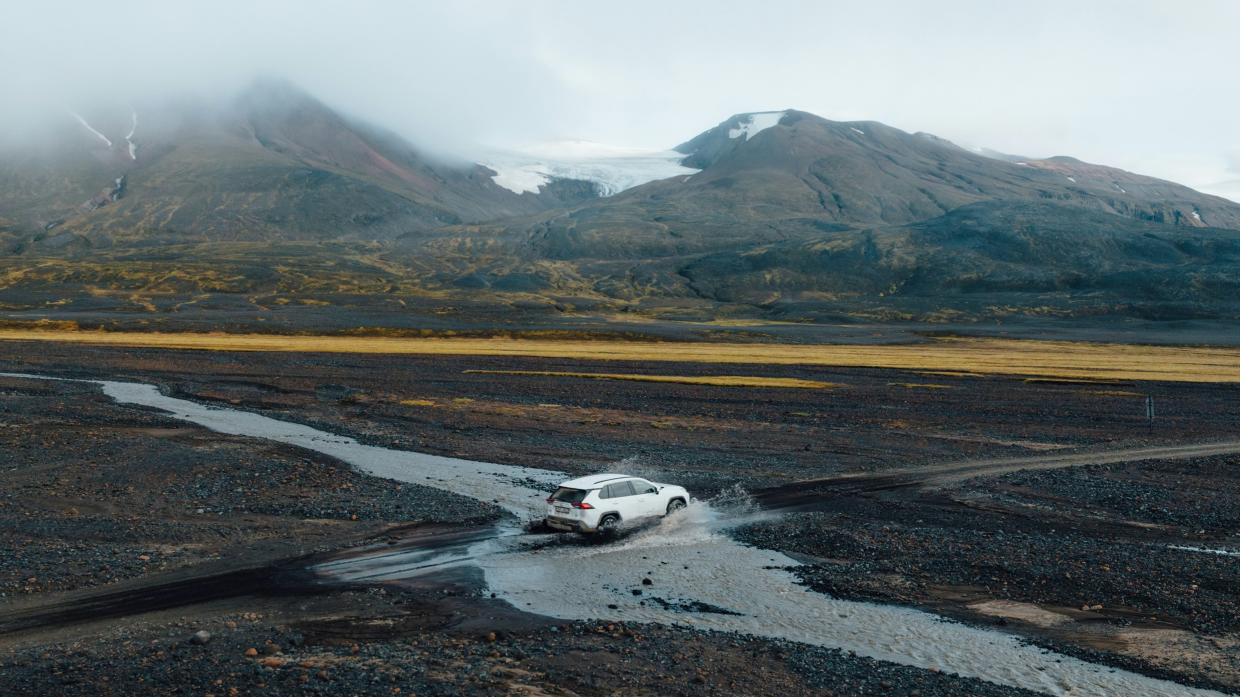
Even in summer, there are F-roads, and then there are F-roads. The condition of such roads varies considerably and this will have an impact on the car or camper that you need to tackle them. Mostly, it comes down to river crossings: some are deeper than others. To cope with the shallowest river crossings, a regular 4x4 or 4x4 camper should usually be perfectly adequate unless the weather’s bad. But for the deeper ones you will need a vehicle with higher clearance and a snorkel.
Taking additional care when driving over deeply rutted roads with large potholes makes a lot of sense. The same can be said for river crossings – do your research about the weather conditions leading up to your trip, particularly how rainfall and meltwater might affect water levels. Never make assumptions; take your time to consider whether fording that river is possible and safe. If you’re in doubt, wait to see whether others can offer advice but be prepared to turn back if necessary.
One of the best tips we can offer is to discuss your needs with us prior to settling on your rental. Let us know the route that you’re considering and we can help you figure out what it will be like in reality, what kinds of roads and river crossings to expect and whether the vehicle you hoped to hire will be up to the job.
If the bulk of your driving experience is in bumper-to-bumper traffic on crowded city roads, then the thought of tackling Iceland’s F-roads could be quite daunting. It’s really important, if you are to enjoy your vacation time in the country, that you are honest with yourself about your own driving capabilities and skills. It’s not for everyone, and there are tours to ensure you won’t miss out if you choose not to self-drive.


