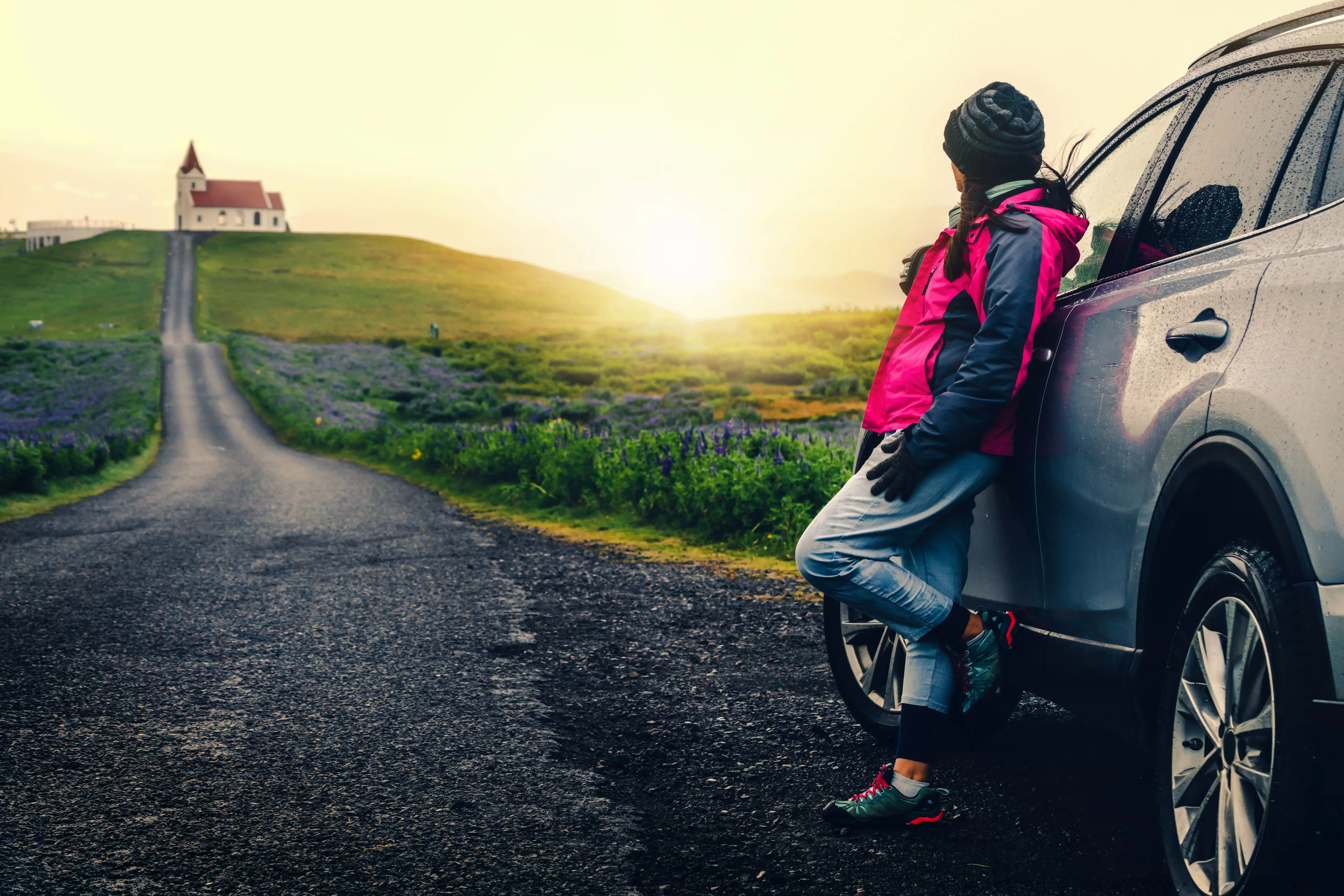
If you’re thinking about tackling the full Ring Road, then buckle up; you’re bound for an all-time adventure. Few things are more thrilling than Iceland’s open road, promising to take you through icy, volcanic, and breathtaking landscapes. But the question of every traveler: “So, how long does it take to drive the Iceland Ring Road without stopping?”
In this guide, we’ll break down the distances, itineraries, and tips so your trip begins (and ends) on a high note. Let’s get you ready for the ultimate Icelandic road trip.
What Is the Ring Road in Iceland
If you’ve spent any time looking at an Iceland map, you’ve probably seen it: a single loop tracing the island’s perimeter. This is Route 1, more famously known as the Ring Road in Iceland. It’s the country’s backbone, threading through Reykjavík to the northern capital Akureyri, and most major towns in between.
The Ring Road is a bit like a “greatest hits” album of Icelandic nature. In one loop, you’ll transition from moss-draped lava fields of the South Coast to the jagged peaks of the Eastfjords. Eventually, the route winds into the North’s moon-like volcanic landscapes.
It doesn’t cover every inch of the island; you’d have to take a detour for the Snæfellsnes Peninsula or the Westfjords. However, it’s the most straightforward way to see Iceland’s heavy hitters. For most first-timers, the Ring Road is the ultimate starting point.
How Long Is the Ring Road?
On paper, the Ring Road (Route 1) is approximately 1,322 kilometers (about 821 miles). If you were driving on a flat, straight highway, you could technically knock that off in about 17 hours.
In reality, driving the Iceland Ring Road is an entirely different beast. For one, the maximum speed limit on paved sections of the Ring Road is 90 km per hour (about 56 mph). Even without the limit, wind gusts make it difficult and dangerous to go fast on narrow Icelandic roads. Sudden mist or rain can drop visibility in seconds.
Gravel roads, single-lane bridges, and even rogue sheep crossing the street can also naturally slow your pace. Photo opportunities are also endless on the scenic Ring Road. Add it all up, and a three-hour drive can easily turn into a five-hour adventure.
Choosing Your Pace: Ring Road Itineraries
Ultimately, answering how long it takes to drive the Iceland Ring Road depends on your personal travel style and your itinerary. Do you want to see every major landmark, or do you prefer a slow, steady road trip? More importantly, how many days or weeks are you planning to stay in Iceland?
While it’s tempting to try to see it all, a weekend is simply too short to circle the entire island safely. To experience the Ring Road in Iceland without nonstop driving, most travelers should set aside at least seven days. This allows space for weather delays, spontaneous detours, and the inevitable lazy family day.
Most visitors highly recommend going counter-clockwise to hit the famous South Coast right at the beginning. However, since the road is a loop, you have the flexibility to choose which direction to go. It’s also worth checking weather and road conditions before departing; sometimes, going clockwise lets you outrun or dodge a storm.
Here are just some of the top Ring Road itineraries.
7 Days: The High-Energy “Greatest Hits” Loop
If you only have a week to spare, you can absolutely make it count by driving the Ring Road. Just be prepared to hit the ground running. This timeframe is a high-energy adventure that focuses on Iceland’s most famous landmarks.
Expect to spend an average of four to five hours behind the wheel daily on a seven-day itinerary of the Ring Road. The payoff is well worth it, though: a front-row seat to the island's most diverse landscapes.
- Day 1 (Arrival and the Golden Circle): Pick up your vehicle at Konvin Car Rental. From Keflavík, head straight to the “Big Three”: Þingvellir National Park, the Geysir geothermal area, and the Gullfoss waterfall.
- Day 2 (The South Coast): Drive past the iconic Seljalandsfoss and Skógafoss waterfalls toward the cliffs of Dyrhólaey. Enjoy the staggering coastal views and historic lighthouse. Between May and August, keep an eye out for puffins.
- Day 3 (Glaciers and Diamonds): Visit the Jökulsárlón Glacier Lagoon to see deep blue icebergs drifting toward the sea. Afterward, walk across the road to Diamond Beach, where ice chunks wash up on the black sand like giant crystals.
- Day 4 (The Eastfjords): This is one of the most scenic stretches of the trip. Wind through steep fjords and stop in colorful fishing villages like Seyðisfjörður.
- Day 5 (Lake Mývatn and the North): Discover the moon-like landscapes of Hverir with its bubbling mud pools. The nearby Goðafoss, famously known as the “Waterfall of the Gods,” is also a must-see.
- Day 6 (Akureyri to West Iceland): A heavier driving day takes you through Akureyri (the Capital of the North), perfect for a quick supply restock. Then, head toward the rolling hills and horse farms of West Iceland.
- Day 7 (Reykjanes Peninsula and Departure): Finish your loop on the Reykjanes Peninsula. Marvel at Gunnuhver’s steaming geothermal vents or take a soothing soak in the Blue Lagoon before your flight.
10 Days: The Sweet Spot for Families and Explorers
For visitors asking “how long does it take to drive the Iceland Ring Road?” 10 days is just right. It strikes the perfect balance between seeing the sights and actually having time to enjoy them. This pace is also ideal because it has built-in “buffer time” for unpredictable weather or hidden gem detours. With more than a week in Iceland, you can take the wheel at a more relaxed pace.
- Day 1 (Arrival and Check In): Land at Keflavík, grab your car rental, and check in at a Keflavík base like Konvin Hotel. Enjoy a relaxed evening locally to recover from your flight and prep for the long journey ahead.
- Day 2 (The Golden Circle): Spend a full day exploring three of the most popular Icelandic sights. With more time in your hands, you can hike the trails at Þingvellir or even snorkel the Silfra Fissure.
- Day 3 (South Coast Waterfalls): Take your time to walk behind the falls at Seljalandsfoss, then hop on to the powerful Skógafoss.
- Day 4 (Jökulsárlón and Diamond Beach): Watching the deep blue icebergs float at the glacier lagoon is a one-of-a-kind experience in Iceland. Zodiac boat tours are available during summer for a closer look at the glittering icebergs.
- Day 5 (The Eastfjords): Enjoy a scenic drive through fjords and stop in the artistic village of Seyðisfjörður for a local lunch. The journey is one of the most beautiful stretches of the Ring Road in Iceland, with plenty of quiet pull-offs for family photos.
- Day 6 (Lake Mývatn): Explore the bubbling mud pools at Hverir and the Dimmuborgir lava formations, often called “dark castles.” End your day with a long soak in the Mývatn Nature Baths, a quieter alternative to the Blue Lagoon.
- Day 7 (Akureyri and Whale Watching): Head to Húsavík, the whale-watching capital, for a morning boat tour before exploring the botanical gardens in Akureyri. The “Capital of the North" is the perfect place to restock supplies and savor a nice meal.
- Day 8 (Northwest Valleys to the West): Visit the Glaumbær Turf Farm to walk through 18th-century grass-roofed houses before a quick soak at the Hofsós infinity pool. Keep an eye out for friendly Icelandic horses in the Skagafjörður valley.
- Day 9 (Snæfellsnes Peninsula): Take a detour to see the iconic Kirkjufell mountain and the dramatic sea cliffs at Arnarstapi. Known as “Iceland in Miniature,” Snæfellsnes is the best way to experience the Icelandic natural features in one afternoon.
- Day 10 (Blue Lagoon and Departure): Head back toward the airport with a final stop at the Blue Lagoon to unwind before flying out.
12 to 14 Days: The Deep Dive
With two weeks, you’re truly exploring the country. At this pace, you can follow the 10-day loop while spending two or three nights in your favorite regions. It’s the ultimate stress-free choice, providing a massive buffer for the weather. It also grants you the freedom to wake up and decide your plans on the fly.
If you have the urge to see the most remote corners of the island, add these regions to your loop:
- The Westman Islands (Vestmannaeyjar): Take the ferry from the South Coast for a day trip to Heimaey. It’s one of the best places in the world to see puffin colonies up close during summer and hike the Eldfell volcano crater.
- The Westfjords Detour: The most remote and dramatic part of Iceland. While recent road improvements have made this area more accessible, the roads remain winding and coastal. The reward? Total solitude at the veil-like Dynjandi waterfall and the red sands of Rauðasandur beach.
- Trollaskagi (The Troll Peninsula): Instead of rushing through the North, take the scenic Route 76 around this peninsula. You’ll drive through mysterious tunnels carved into mountains, then stop for a unique soak at the Beer Spa in Árskógssandur.
- The Snæfellsnes Peninsula: While shorter trips rush this area in a day, two weeks lets you spend two nights here. Visit the Vatnshellir Cave for an underground lava tube tour or spend a morning seal-watching on Ytri Tunga beach.
Best Time to Drive the Ring Road in Iceland
Timing your trip is all about balancing what you want to see with your comfort behind the wheel. While the Ring Road is maintained year-round, your detour options change with the seasons.
- Summer (June–August): This is the only time the Highlands (F-roads) are open. If your heart is set on the remote interior or driving the full Westfjords loop, you must visit now. Another benefit? You’ll have nearly 24 hours of daylight to play with. However, this is the busiest tourist season; book your Konvin car rental and room early.
- Shoulder Season (May and September): In September, you get the best of both worlds; most roads remain clear, and the northern lights return. May is beautiful for the arrival of puffins and long days. Both months offer lower prices and fewer crowds than mid-summer.
- Winter (October–April): The main Ring Road stays open, but secondary roads to remote fjords or waterfalls often close due to snow. The Highlands are strictly closed. At the same time, the rewards are magical with crystal-blue ice caves and the best northern lights viewing. But if you aren't comfortable with winter driving, stick to the South Coast and the Golden Circle.
Practical Tips for Stress-Free Driving on the Ring Road
To keep your journey safe and seamless, here are the non-negotiable rules for the Icelandic road.
- Check Conditions Frequently: Before you take the wheel, check vedur.is (weather) and road.is (road conditions). In Iceland, a sunny morning can turn into a localized blizzard or sandstorm by noon.
- Lokað Means Closed: If you see a sign that says Lokað, do not attempt it, even in a 4x4. It usually means the road is washed out, blocked by a drift, or at risk of an avalanche.
- Hold Your Doors: Icelandic wind is famous for catching car doors and bending the hinges. Always hold the door with both hands when getting in or out, especially near the coast.
- Refuel When Possible: In the Eastfjords and the North, gas stations are few and far between. Make it a habit to refill whenever your tank hits the halfway mark.
- Always Use Your Headlights: In Iceland, it is legally required to keep your headlights on 24/7, even in the bright summer sun.
- Master the Single-Lane Bridge: You’ll encounter many of these on the Ring Road. The rule is simple: the car closer to the bridge has the right-of-way. Slow down as you approach these bridges.
- Don't Stop on the Roadside: Stopping on the shoulder of the Ring Road is illegal and extremely dangerous. Always wait for a designated parking area or a turnout marked with a blue "P" or "M" sign.
- Prepare Your Driving Requirements: Make sure your paperwork is in order for a smooth pick-up at the Konvin rental desk. You must have held a valid driver's license for at least one year. If your license is not in the Roman alphabet, you will need an International Driving Permit (IDP).
- Find a Base in Keflavík: Starting your journey at Konvin Hotel gives you time to rest and stock up on supplies before driving the Ring Road. At the end of your road trip, it’s also the ideal base, with its morning shuttle to the airport for early flights.
How Long Does It Take to Drive the Iceland Ring Road?
The answer depends on you. Sure, you could technically drive the full 1,322 kilometers (about 821 miles) in less than 20 hours of pure “windshield time.” But rushing would mean missing the very landscapes you flew here to see.
For a balanced, stress-free adventure, seven days is the absolute minimum required to complete the loop without exhaustion. However, if you are traveling with family or want relative flexibility, 10 to 14 days is the ideal timeframe.
By starting your journey at a reliable base like the Konvin Hotel in Keflavík, you give yourself the best possible start. Kick off the road trip with a well-rested driver, a reliable car rental, and the freedom to adjust your pace. Whether you’re chasing the midnight sun or navigating a winter wonderland, the Ring Road is the ultimate Icelandic expedition.
Frequently Asked Questions about the Ring Road
How long does it take to drive around Ring Road in Iceland?
While the "pure" driving time is about 17–19 hours, a realistic trip takes 7 to 10 days. This accounts for the 90 km speed limit, single lane bridges, and the inevitable stops for photos at places like Jökulsárlón Glacier Lagoon.
Can I see the Northern Lights from the Ring Road?
Yes! If you travel between September and April, the Ring Road takes you through some of the best "dark sky" areas in the country. The North of Iceland is particularly famous for clear skies, making it a prime spot to catch the northern lights from your hotel window.
Is driving the Ring Road difficult?
The road is mostly paved, but you will encounter gravel roads on certain detours and many single-lane bridges. As long as you check safetravel.is and respect the weather, it is a very manageable and enjoyable drive for most travelers.
Should I start my trip in Keflavík?
Absolutely. Landing at KEF and picking up your car rental immediately allows you to bypass the city traffic of Reykjavík. Starting at the Konvin Hotel gives you a chance to rest after your flight, so you can begin the long road drive with full energy.